


I spent time with Video Downloader & Launcher as a video player and editing companion, and my first impression was that it is trying to solve a very specific problem: giving you a private place to browse content and decide what you want to watch or download. That focus makes it more interesting than a basic download button, but it also means you need to understand its browser-centered approach before installing it.
The app is free to start, carries an Everyone age rating, and comes from Video Downloader & hubMate Apps. It has built a solid audience, with more than a million installs and an average rating of 4.1. Those figures suggest that the concept works for many people, although they should not be treated as proof that every website or video source will behave perfectly inside it.
How the private browser approach feels in daily use
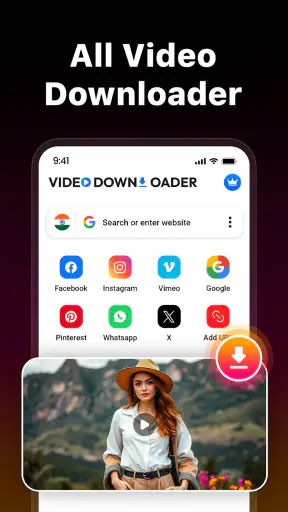
The main experience revolves around the Web Proxy Browser. Instead of opening a separate browser, copying a video address, switching to another downloader, and then returning to a player, I found the workflow more contained. You browse, identify the content you want, and manage the viewing or download process from the same general environment.
That arrangement is especially useful when I want to keep casual video discovery separate from my ordinary browsing. It reduces the need to move links between apps and makes the app feel less like a single-purpose downloader and more like a small media workspace. The most natural use is watching content privately, saving something for later, and opening it again without rebuilding the original browsing session.
There is an important distinction here: a proxy browser is not the same thing as a universal solution for every online video. Websites can handle playback and downloads in different ways, and some content may be restricted by the source itself. I would therefore install this for convenient, private browsing and downloading where supported, not with the assumption that every clip on the internet can be saved.
In an everyday scenario, imagine finding a long video while using your phone during a commute. Rather than leaving the page open and hoping the connection remains stable, you can use the app’s browsing workflow to prepare the content for later viewing when downloading is available. That is a practical benefit, particularly for people who often move between unreliable mobile connections and Wi-Fi.
What makes it different from a normal browser
A standard browser is usually better for general web tasks, account management, shopping, research, and broad compatibility. Video Downloader & Launcher has a narrower purpose. Its value comes from putting video discovery and saving at the center, rather than treating video as one activity among dozens.
I also see a useful separation between streaming and downloading. Streaming is convenient when you have a strong connection, but it depends on the service remaining available and can consume data repeatedly. A downloaded copy can be more practical for repeated viewing, travel, or places where reception is inconsistent. The trade-off is that downloads need storage and may not behave like permanent ownership of the original content.
Compared with a dedicated media player, this app is more convenient at the beginning of the process because browsing and saving are connected. A dedicated player can still be the better choice for someone who already has a carefully organized local library or needs advanced playback controls. This app’s strength is the route from online content to personal viewing, not necessarily deep library management.
What the current release tells me
The current version is 1.7, and the app was released on March 1, 2026. I read that as a relatively early stage in its product life rather than as a sign that the experience is finished. The basic idea is clear, but an app built around web content has to keep adapting as websites change their playback methods, layouts, and restrictions.
That matters more here than it would for an offline calculator or a simple note-taking tool. A browser-based downloader can feel smooth one day and require adjustment after a website changes its page structure. When I judge this app, I therefore pay attention not only to whether the central workflow is understandable, but also to whether the developer continues refining compatibility and reducing friction.
The version number gives existing users a useful reference point. If you are already using an earlier build, the current experience should be judged by how reliably it handles your regular sources rather than by the number alone. A newer version can improve the overall workflow without guaranteeing identical behavior across every website.
How current users may benefit from the evolution
For someone who installed it early, the most meaningful improvement is likely to be confidence in the routine: open the browser, find the content, choose the available action, and return to it later. Even small interface refinements can matter when the same task is repeated often. A downloader becomes useful when it removes hesitation, not when it merely offers many buttons.
I would also recommend creating a simple personal habit around it. Decide in advance whether you are saving videos for offline viewing, temporary reference, or repeated access. That prevents the download area from becoming a pile of forgotten files. The app is more useful when it is part of a deliberate viewing workflow instead of a place where every interesting clip is saved automatically.
Another practical tip is to test one short, nonessential video from a source you use regularly before relying on the app for a long trip. This lets you see how the source behaves, how easy the saved item is to reopen, and whether the result matches your expectations. It is a small test, but it avoids discovering compatibility problems after you have already lost connectivity.
Privacy is also part of the appeal, but I would interpret that word carefully. The app’s private browsing angle can help keep this activity separate from your ordinary browser history and habits. It does not mean that every online source, network, or downloaded file becomes invisible in every situation. I like the separation, but I would not use the word as a reason to ignore sensible browsing practices.
Where the workflow still needs patience
The biggest limitation is the dependence on external websites. If a page uses unusual playback technology, requires an account, blocks automated access, or changes its layout, the experience may be less direct than the store summary suggests. That is not a flaw unique to this app, but it is central to deciding whether the app fits your needs.
I also would not choose it as my only tool for managing a large personal video collection. The app’s identity is built around browsing and downloading, while serious library management usually calls for clear folders, dependable sorting, metadata handling, and broad format support. If those are your priorities, a dedicated local media manager may be a better companion.
Storage is another trade-off that is easy to overlook. Downloading makes viewing more flexible, but saved videos occupy space and can accumulate quickly. I recommend checking the phone’s available storage before preparing several long videos, then removing items once they have served their purpose. This is particularly important on devices with limited capacity.
The app is free, with in-app purchases listed at $5.99 per item. That gives you a low-risk way to try the central workflow, but I would still look carefully at what any optional purchase changes before paying. The right question is not simply whether a paid item exists; it is whether it removes a recurring annoyance in the way you personally use the app.
Because the app is rated for Everyone, it is positioned as accessible to a broad audience. That rating does not replace personal judgment about the websites someone visits or the videos they choose to save. Parents and guardians should still guide younger users around online content, private browsing, and downloads, just as they would with any browser-based tool.
Who should install it, and who should skip it
I think it is a good match for people who regularly watch online video, want a more contained browsing experience, and occasionally need content available when a connection is unreliable. It is also appealing if you dislike copying links between several apps and prefer a single place to browse and manage video-related tasks.
I would be more cautious if you need guaranteed downloads from particular services. The app may be useful for your sources, but I would test those sources rather than assuming compatibility. I would also skip it if your main requirement is professional video editing, because a downloader and browser workflow is not the same as a full editing suite.
It is not the best fit for someone who already has an excellent browser, a trusted downloader, and a well-organized media player. In that case, adding another app may create more duplication than convenience. Its strongest argument is consolidation: fewer handoffs between discovering, saving, and watching content.
Questions I would ask before making it a regular tool
Can it replace my ordinary browser? In my view, no. It is better treated as a focused video browser than as a complete everyday browser. Keep your usual browser for tasks that require broad compatibility, familiar account tools, or extensive web features.
Is it suitable for offline viewing? That is one of its clearest use cases when the relevant source permits downloading. I would verify the result with a small test first, especially before traveling, and I would remember that an offline file may still be subject to the source’s terms or limitations.
Will it handle every video website? I would not count on that. Web video is inconsistent, and the app’s success depends partly on how each site delivers its content. The practical answer is to test the exact services you use most instead of relying on a general promise.
Does free mean there are no costs at all? You can begin without paying, while optional in-app purchases cost $5.99 per item. I would use the free experience long enough to identify a genuine need before considering any purchase.
Is it a full video editor? No, and that distinction matters. It belongs to video players and editors as a category, but its clear identity is browsing, watching, and downloading. If you need trimming, transitions, captions, or a production timeline, look for an app designed specifically for editing.
What I would watch in future updates
For the next stage of the product, I would watch how consistently the Web Proxy Browser works with the sources that users depend on most. Compatibility is more valuable than adding a long list of decorative options. A reliable, understandable workflow will do more for this app than an overloaded interface.
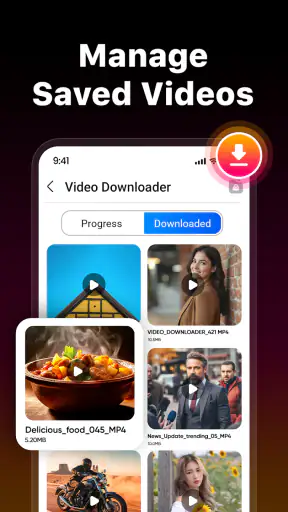
I would also look for clearer control over downloaded content: easy discovery of saved videos, sensible cleanup, and a straightforward path from a completed download to playback. Those details determine whether the app remains useful after the initial novelty of private browsing wears off.
Existing users should pay attention to update behavior around their regular websites. If a source stops working, it may be worth checking whether the current version resolves the problem before abandoning the app. At the same time, I would keep an alternative browser or player available for important content, because web-based tools always carry some uncertainty.
My overall view is positive but measured. Video Downloader & Launcher has a focused idea and a practical place in a phone’s toolkit: it brings private video browsing, watching, and supported downloads closer together. I like it most for occasional offline preparation and for people who want to avoid passing links through several separate apps.
It is not a universal downloader, a replacement for every browser, or a professional editing workstation. Its success depends on the websites you use, the amount of storage you have, and how much value you place on keeping video activity in one focused environment. If those conditions match your habits, the free entry point makes it easy to try. If you need guaranteed source compatibility or advanced media management, a more specialized alternative will probably serve you better.


